Warehouse floors can be cleaned while forklifts continue operating elsewhere in the building, provided cleaning activities and vehicle movements are effectively separated. Forklifts should not travel through an active cleaning area or over a surface that has not been assessed as ready for traffic.
The choice is therefore between closing individual zones while other routes remain operational and temporarily stopping movements across a larger area. The available space, traffic pattern and cleaning method determine which arrangement is practical.
Why shared forklift aisles create conflicts
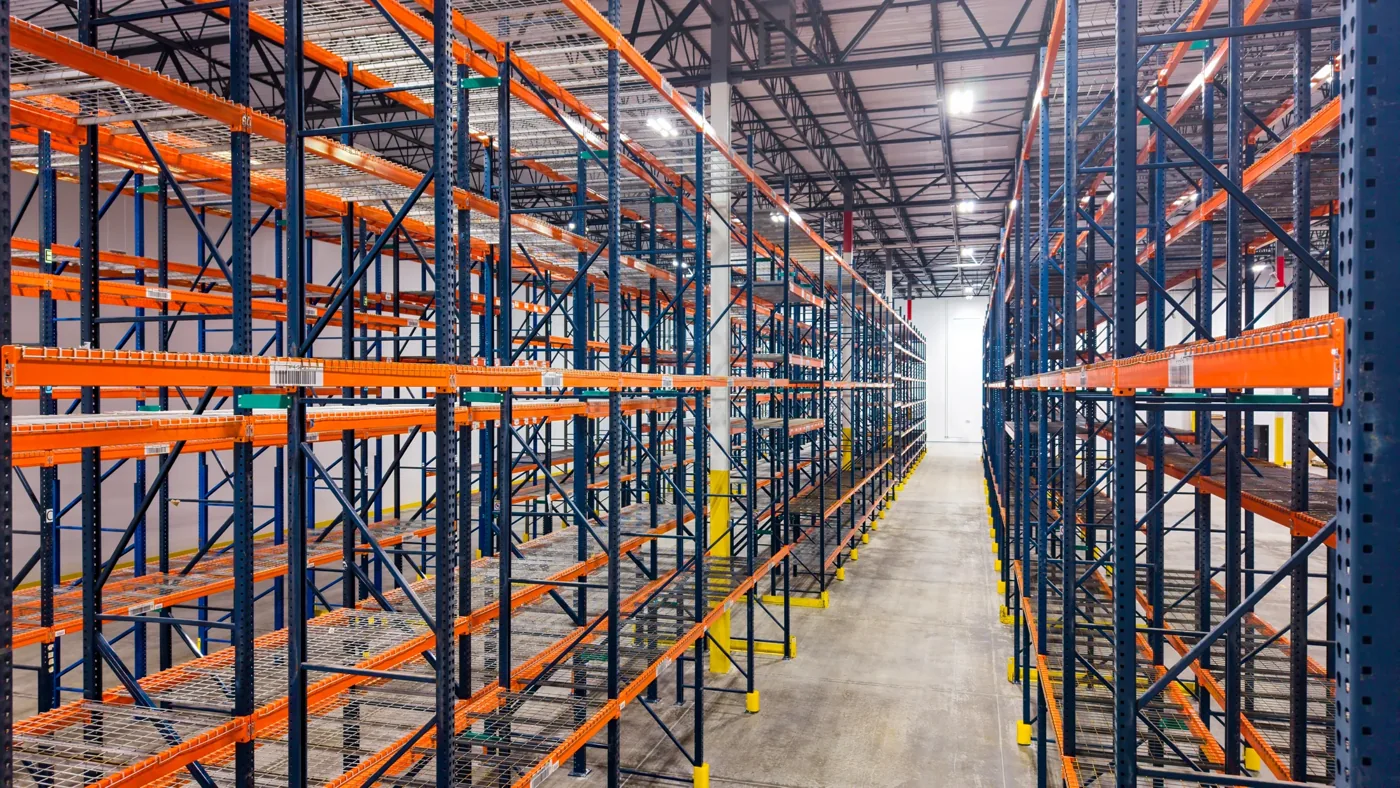
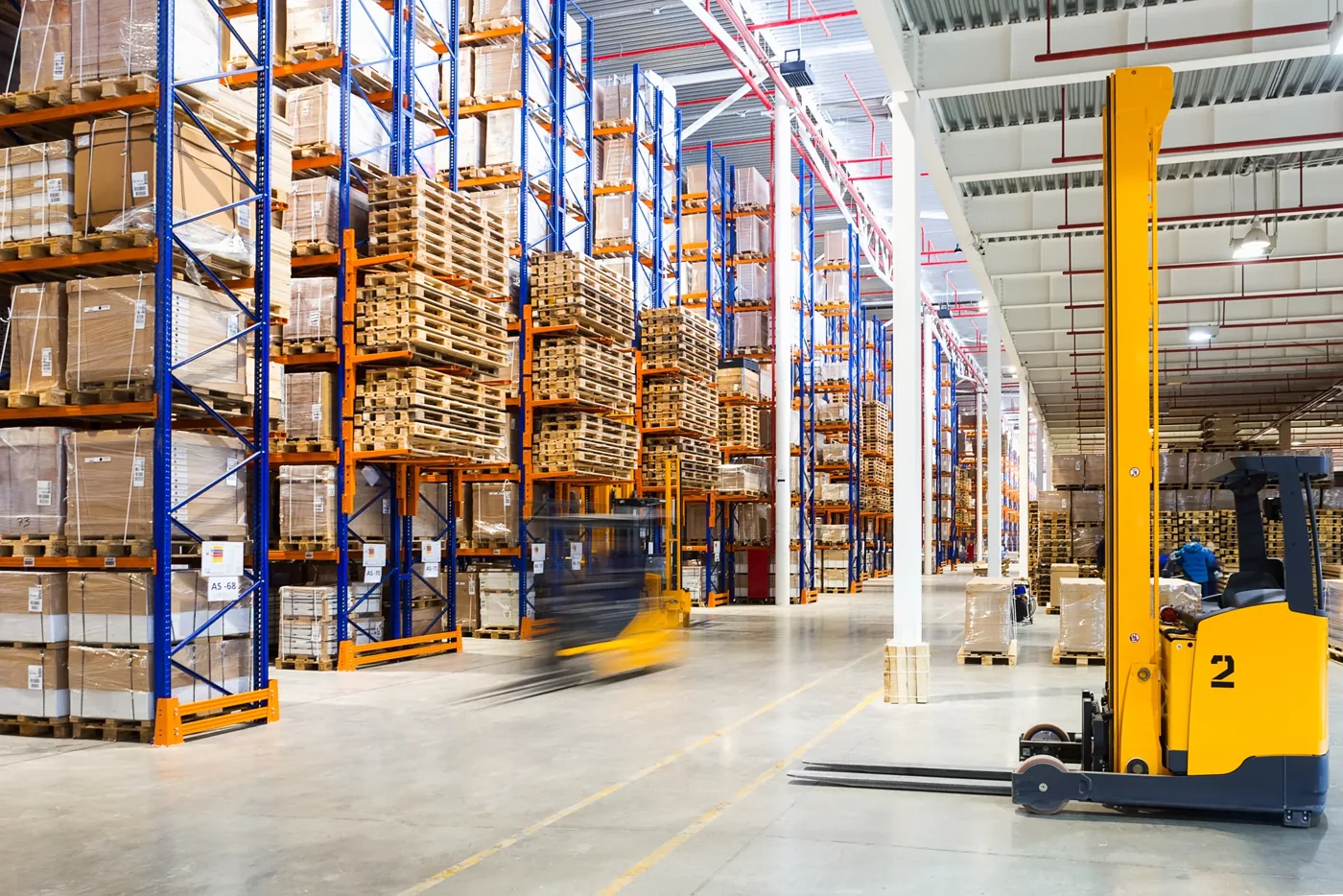
An occupied forklift aisle is not simply an empty strip of floor between racking. Drivers may be carrying loads that restrict visibility, reversing from storage positions or turning towards dispatch areas. Cleaning introduces workers and equipment into those movements.
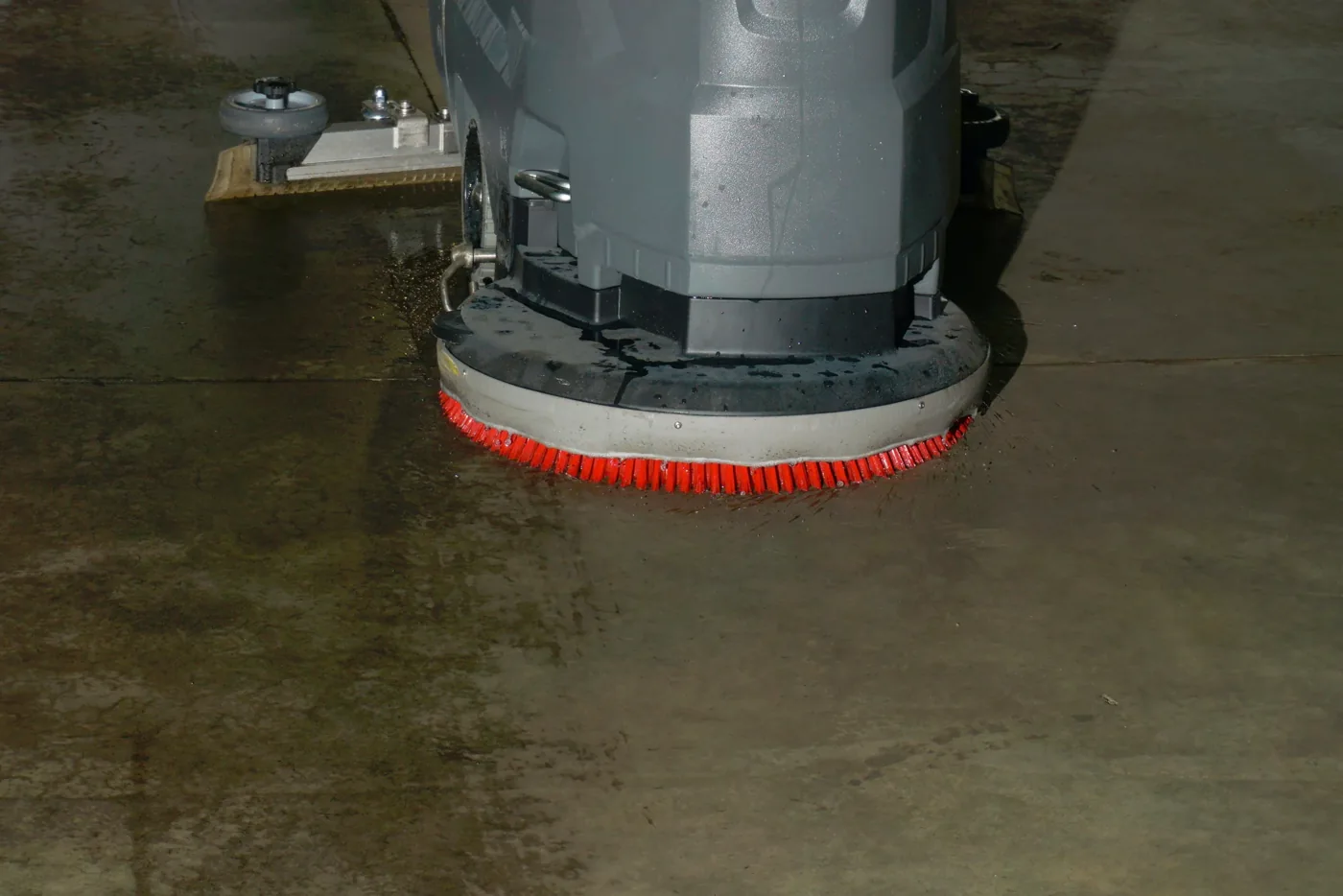
Floor-cleaning machines, recovery hoses, trailing cables and temporary barriers can also affect how vehicles negotiate an aisle. Water or cleaning solution remaining on the surface may create another hazard after the cleaning equipment has moved away.
The Health and Safety Executive’s guidance on separating pedestrians and vehicles explains why workplace routes should separate vehicle and pedestrian movements wherever reasonably practicable, with suitable controls where routes intersect.
For warehouse floor cleaning, this means considering the movement of cleaning personnel as well as normal warehouse staff. High-visibility clothing alone does not provide physical separation from moving forklifts.
Segregated zones versus full closure
A zoned arrangement can work when the warehouse has alternative vehicle routes, sufficient clearance and space to establish secure cleaning boundaries.
For example, one picking aisle may be taken out of service while goods movements continue along a separate approved route. Once the cleaned aisle is ready for use, the next section can be isolated.
The proposed sequence should establish:
- Which routes remain open: Confirm that forklifts can reach essential storage, charging, goods-in and dispatch areas without entering the cleaning zone.
- Where barriers will stand: Protect cleaning personnel without reducing turning space or obstructing an adjacent traffic route.
- How stock movements change: Consider picking schedules, replenishment runs and urgent deliveries before closing an aisle.
- Who controls access: Ensure drivers and supervisors understand when a section is closed and who authorises its reopening.
Painted floor markings are useful for normal routes but may not be sufficient to separate a temporary cleaning operation from active vehicle traffic. Where physical separation is needed, barriers should be suitable for the site traffic risks and positioned to protect the cleaning area. Cones or tape alone do not physically prevent forklifts entering.
Where vehicle routes cannot be separated, work should be arranged during a period when those movements stop. This may be the more practical approach in narrow aisles, heavily used loading areas or locations with no safe diversion.
Working around goods movement
Distribution centre cleaning presents additional constraints because forklift activity often supports several connected operations. Closing a route may affect pallet replenishment, conveyor feeds, order picking and vehicle loading.
It helps to identify the busiest routes and the time periods when they are least heavily used. Cleaning can then be sequenced around genuine operational breaks rather than assuming every aisle can remain available.
The separate distribution centre cleaning service covers the wider environment, including areas beyond the floor itself.
Reopening routes without wet-surface conflicts
Finishing a cleaning pass does not automatically mean an aisle can reopen. The surface may still have standing liquid, damp patches, loosened debris or residues that require further recovery. The HSE’s floor-cleaning guidance explains the importance of restricting access to wet or drying floors. Reopening an aisle requires consideration of the actual surface condition and the forklift movements that will resume, not simply whether the cleaning machine has finished.
Before releasing a section to forklift traffic, the agreed completion check should consider:
- Whether cleaning solution and dirty water have been recovered adequately.
- Whether the floor is adequately dry, free from remaining cleaning residue and suitable for the expected forklift movements, including braking and turning.
- Whether hoses, equipment and temporary materials have been removed.
- Whether barriers can be taken down without directing vehicles towards another active work area.
Damaged coatings, joints and uneven sections may need separate attention. Cleaning does not itself resolve structural defects or restore an unsuitable floor finish.
A planned warehouse floor cleaning operation should therefore identify both the cleaning sections and the conditions required for each section to return to service. The warehouse cleaning sequence should also identify who confirms completion, who authorises reopening and how drivers are informed that the normal traffic route has been restored.
Where these boundaries cannot be maintained reliably, a temporary closure is preferable to allowing cleaning personnel and forklifts to share the same working space.