Production Line Cleaning and Decontamination

Production line cleaning addresses residues left where materials are fed, transferred, processed and discharged. A useful specification follows that product path, including parts hidden beneath guards or around transfer points. The required finish depends on whether the line is changing products, returning from maintenance or dealing with an identified contaminant.

HomeProduction Line Cleaning and Decontamination

Production Line Cleaning and Decontamination enquiry

Define the residue before choosing the method

Dry dust, grease, adhesive, wet product and packaging fragments behave differently during cleaning. The process history helps identify where each material accumulates and which surfaces it contacts. Residue from one part of the line can also be carried to the next transfer point.

The reason for cleaning determines the acceptance criteria. Production line decontamination requires an identified contaminant and a way to assess its removal. A visually clean surface does not provide the same evidence as a test for a particular allergen, chemical or microorganism.

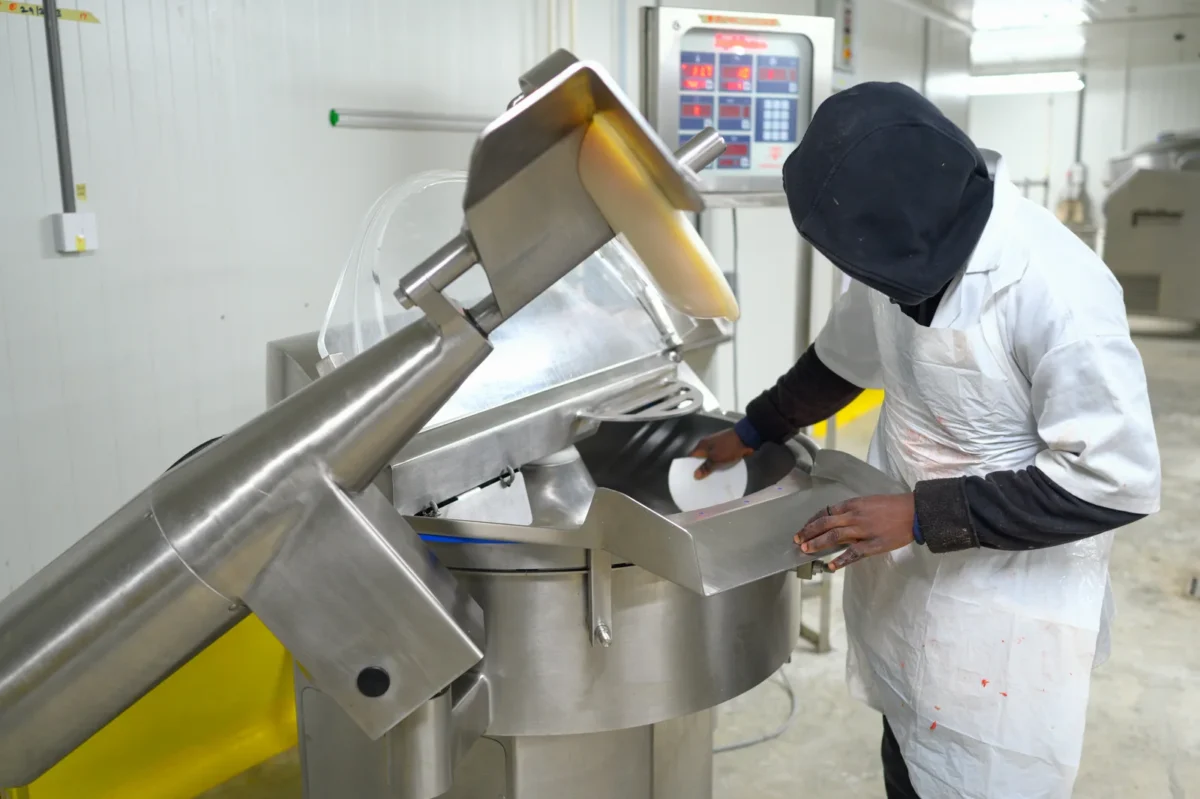
Worker cleaning the inside of a food processing machine

Transfer points and guarded areas

Belt returns, transfer chutes and the undersides of guarding can retain material after the visible working surface has been wiped.

Isolation and hygiene controls

Unexpected movement, stored energy and hygiene-zone separation are addressed before hazardous parts are cleaned.

Follow the line beyond the visible belt

Belt returns, rollers, chutes, supports and the undersides of guards can retain deposits after the main working surface has been cleaned. A line drawing or equipment list helps divide the work into manageable sections and identify the parts requiring maintenance access.

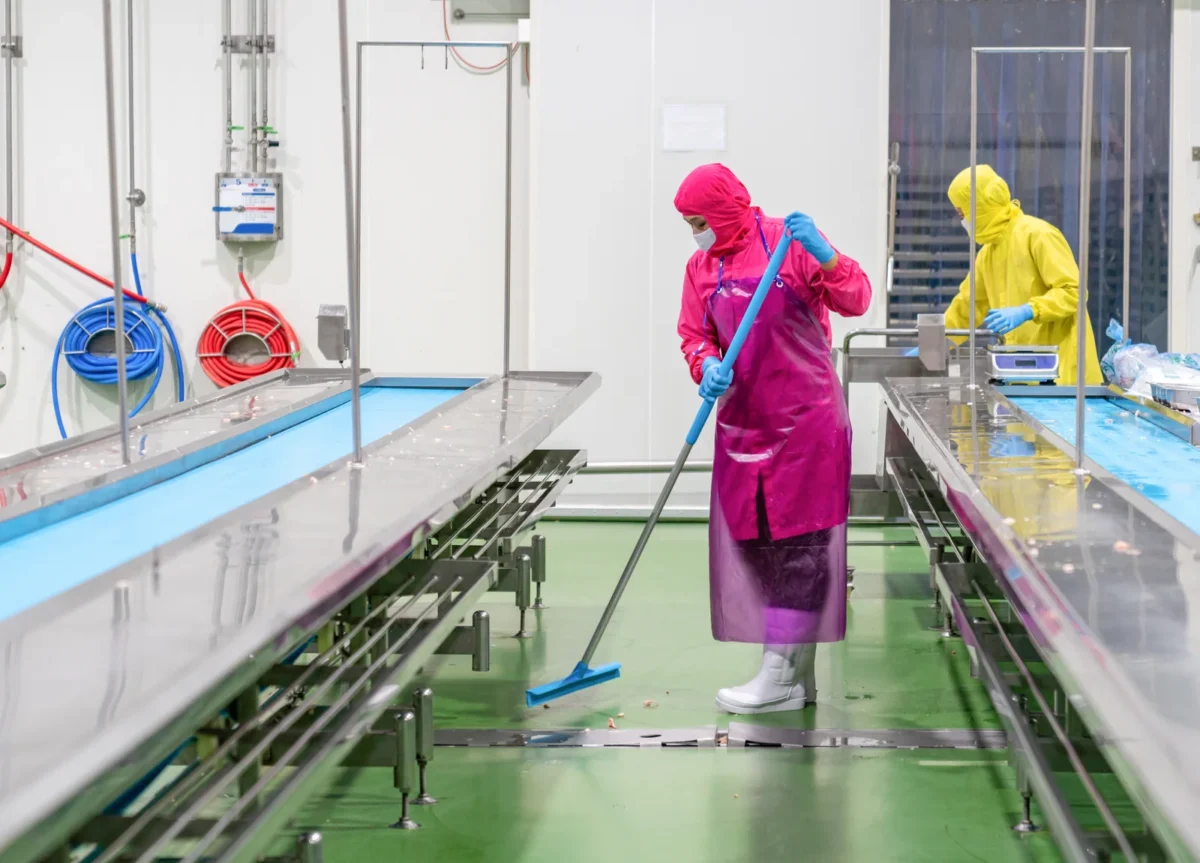
Cleaning boundaries should distinguish product-contact surfaces from machinery surrounds, floors and overhead structures. Adjacent lines can have different hygiene requirements or remain in production. The sequence therefore needs to account for how removed material, tools and personnel move through the area.

Protect components and coordinate isolation

Sensors, seals, bearings, electrical enclosures and lubricated components have different tolerances for moisture and cleaning agents. Manufacturer information and site maintenance knowledge help determine which parts can be washed, wiped or treated by another compatible method.

Opening equipment for cleaning can involve stored energy and unexpected movement as well as electrical supplies. The HSE guidance on equipment maintenance explains why isolation, planning and communication are important when work exposes normally enclosed parts.

The cleaning schedule should show who controls access, removes guards where required and confirms that components are reinstated. These activities are not interchangeable with the removal of deposits, even when they happen during the same shutdown.

Workers washing a food-production floor beside processing conveyors

Discuss production line cleaning

Complete the form and we will get back to you.

Make the shutdown specification usable

A description such as “clean the entire line” leaves important questions unresolved. Equipment identifiers, accessible faces, transfer points and agreed exclusions make the work easier to inspect. They also show whether a later production change introduces a surface that was outside the original specification.

The available shutdown period affects preparation, cleaning, drying and checking. Comparing quotations on these stages is more useful than comparing only the time allocated to applying water or cleaning product. The intended restart conditions belong in the specification before work begins.

Check the result against the purpose

A completion record can identify each line section treated, visible residual material and areas not reached. Where the site requires hygiene testing, its sampling locations, test methods and acceptance criteria determine how cleaning is evaluated. For example, an allergen changeover may require evidence specific to the allergen concerned, rather than visual inspection alone. The site must define what constitutes an acceptable result before the line is released for its next use.

The site’s production, quality and maintenance arrangements govern release back to use. Cleaning does not itself establish calibration, mechanical fitness or validation of a production process. Keeping these decisions distinct makes the record useful for the next shutdown and for investigating recurring deposits.

Environmental questions

Ian Bennett and Mark Lynch are environmental consultants who can speak on our behalf about our environmental services.

Production Line Cleaning and Decontamination: common questions

Is decontamination the same as general cleaning?

Decontamination is directed at a particular contaminant and needs an appropriate method and acceptance check. General removal of visible dirt does not establish that result.

Are guards and machine settings included?

Their removal, reinstatement and adjustment belong in the agreed maintenance arrangements. They should not be assumed to be included in a cleaning description.

Can a line be cleaned between different products?

Product changeover is one reason for cleaning. The previous and next products, equipment materials and required checks determine the appropriate specification.

Industrial Cleaning Service

Services

Request a quote

Menu

Get a quote