

Confined space cleaning removes deposits from tanks, pits and other enclosed work areas where serious hazards may exist. We first assess whether the cleaning can be completed from outside. Necessary entry requires its own assessed safe system, competent people and emergency arrangements.
Confined Space Cleaning
Confined space cleaning for tanks and pits, considering external methods first and planning safe entry and rescue where necessary.
HomeConfined Space CleaningConfined Space Cleaning enquiry
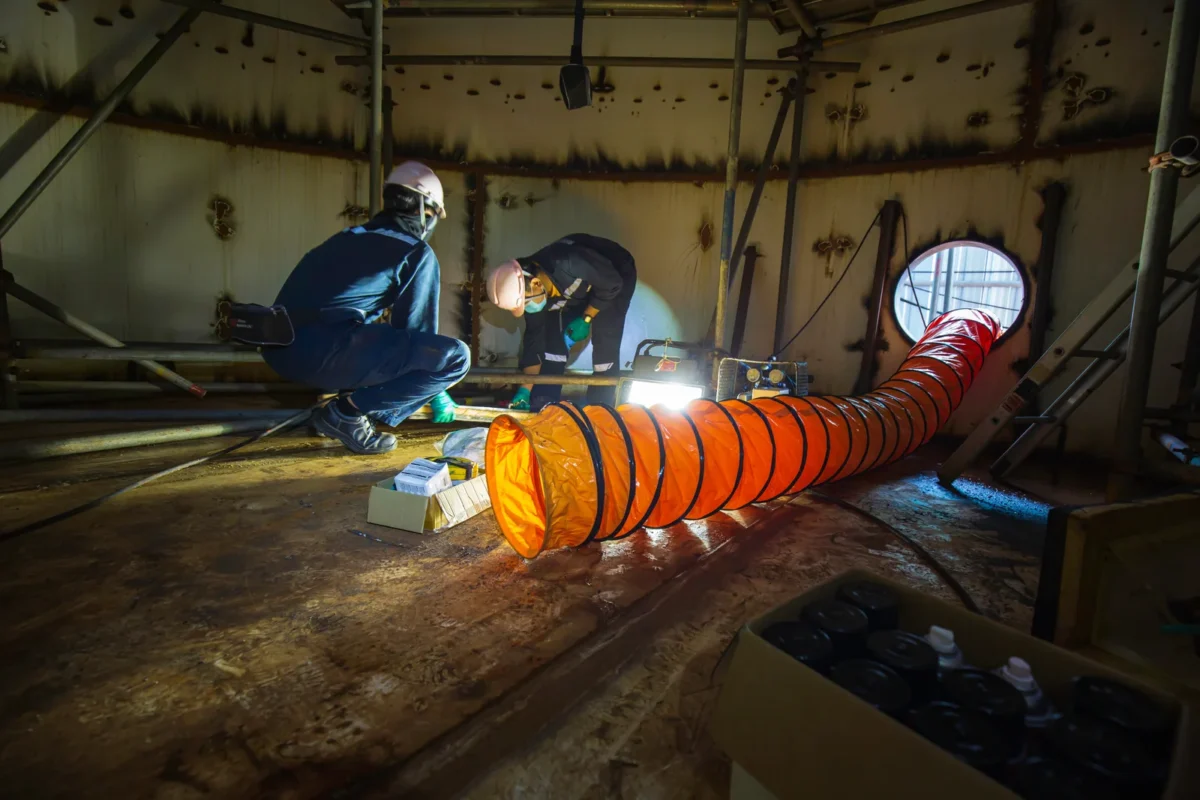
Atmosphere, isolation and rescue arrangements
An empty vessel can retain harmful vapour or have too little oxygen.
Entry control
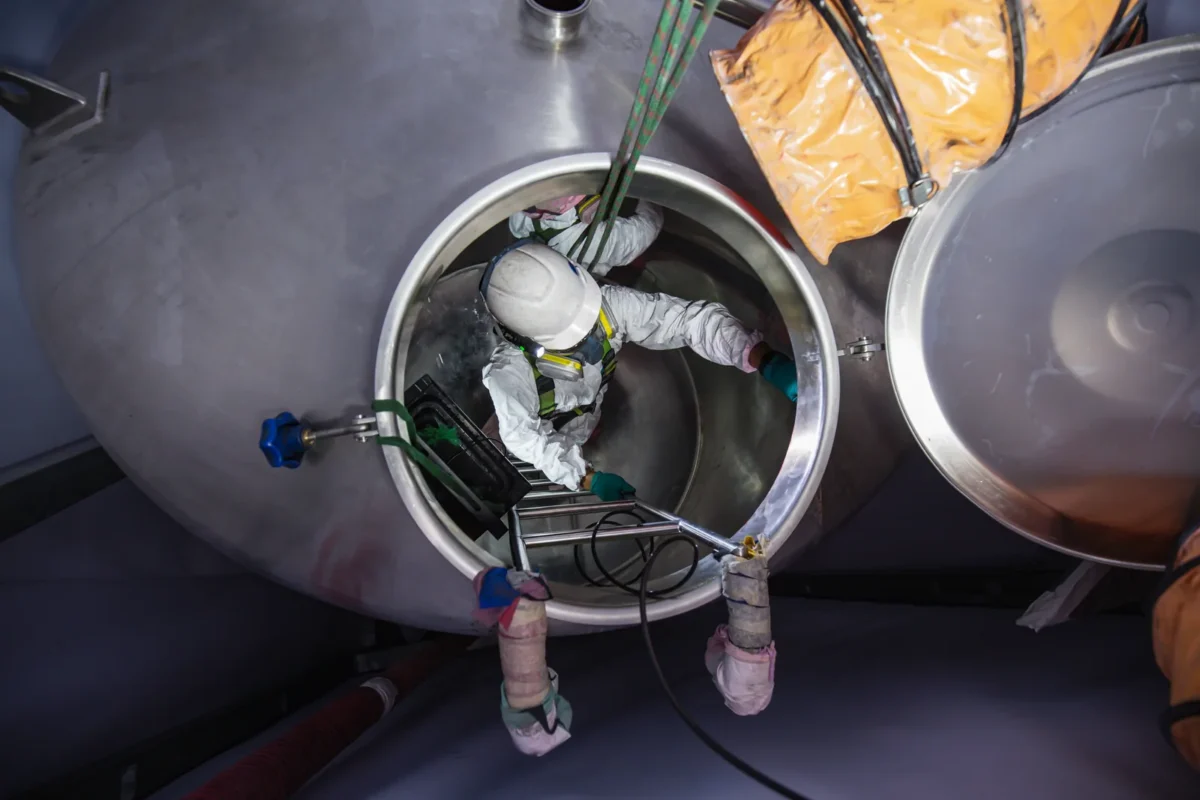
Remote methods are considered first; any necessary entry requires assessed controls and rescue arrangements.
Atmosphere, isolation and rescue arrangements
An empty vessel can retain harmful vapour or have too little oxygen. Connected pipes and equipment can introduce liquids or energy while cleaning is underway. If entry is necessary, the safe system of work addresses isolation, atmosphere checks and communication. Supervision and rescue arrangements must be ready before entry, including the equipment needed for the assessed risks.
Discuss confined space cleaning
Complete the form and we will get back to you.
Avoiding entry where possible
External suction or remote cleaning tools may remove the need for entry, but their reach must achieve the agreed result. Where entry remains necessary, monitoring and ventilation reflect the atmosphere and cleaning method. We work within the site’s permit-to-work arrangements and do not rely solely on the emergency services as the rescue plan.
Cleaning completion and future entry
The completion check relates to the purpose of the clean, such as residue removal or inspection access. It does not declare the space safe for every future task. We identify inaccessible deposits and explain any further work needed before another team enters or begins maintenance.
Internal obstructions can leave parts untreated even when most of a vessel is cleaned remotely. Those areas are recorded as access limitations, and any later entry is assessed as a separate task.
Confined Space Cleaning: common questions
Is an empty tank automatically safe to enter?
No. Residues, atmospheres and connected equipment can remain hazardous in an apparently empty tank.
Does every small room count as a confined space?
The enclosed nature of the space and specified serious risks determine whether the rules apply.
Can emergency rescue rely only on calling the fire service?
No. Suitable rescue arrangements must be prepared for the work before entry begins.
Can cleaning avoid entry?
External suction or remote tools may achieve the required result, and we assess these first.
Does a clean tank remain safe indefinitely?
No. The atmosphere and connected systems can change; each later task needs its own assessment.