Grease returning to an industrial floor after cleaning can have three causes: contamination retained in the surface, fresh oil or grease arriving from nearby equipment, or a cleaning method that has not fully removed the deposit. The distinction matters because another cleaning pass may remove the visible grease without addressing why it returns.
For a factory manager, the useful starting point is to establish where the slippery area appears, how soon it returns and whether its location corresponds with machinery, fluid handling or regular traffic movements.
Embedded residue or fresh contamination?
Grease that reappears in the same position does not necessarily indicate a failed cleaning treatment. The floor might contain residual contamination, particularly where an older concrete slab is porous, worn or cracked. Alternatively, a new deposit may be forming after every production shift.
These situations can look similar but have different explanations. Residue held in surface defects may become more visible after washing, while fresh contamination tends to correspond with equipment operation, material handling or movement through the area. A remaining greasy film may also indicate that the cleaning product, contact time, agitation or dirty-water recovery was unsuitable for the deposit and floor finish.
Look for differences in the pattern:
- Returning patches in the same location: Investigate the floor condition and whether contamination has penetrated joints, cracks or unsealed concrete.
- Fresh streaks or droplets: Check whether machinery or transferred materials are introducing new deposits.
- Tracks extending across walkways: Consider whether forklift tyres, footwear or handling equipment are spreading contamination from another location.
- Grease concentrated along production equipment: Investigate lubrication points, fluid connections and maintenance activity.
The interval between cleaning and recurrence is useful evidence. A patch appearing immediately after the floor dries suggests a different problem from a deposit forming only when a particular machine operates.
How machinery leaks recreate the problem
Industrial equipment can introduce lubricating oil, hydraulic fluid, cutting fluids and other process residues onto surrounding floors. A small recurring leak may produce a surprisingly extensive slippery area once traffic spreads the material.
Common locations worth investigating include machine bases, hydraulic connections, lubrication systems, conveyors, transfer stations and areas where drums or containers are handled.
Machine degreasing can address accumulated deposits on appropriate accessible surfaces, but it cannot correct a defective seal or leaking connection. Cleaning the floor repeatedly while the equipment continues releasing fluid is unlikely to provide a lasting result.
The Health and Safety Executive’s machinery maintenance guidance explains the importance of identifying equipment faults and planning maintenance safely, including isolation of machinery and pressurised fluid systems where required.
Cleaning access and mechanical repairs therefore need clear boundaries. A cleaning team can work on an agreed contaminated area, while competent maintenance personnel investigate and correct the underlying equipment defect.
When cleaning needs a maintenance intervention
The decision depends on whether the surface itself is retaining grease or an operational source continues supplying it.
Where fresh contamination is found, controlling the source should precede final floor treatment. Otherwise, a newly cleaned walkway may become slippery again as soon as production resumes.
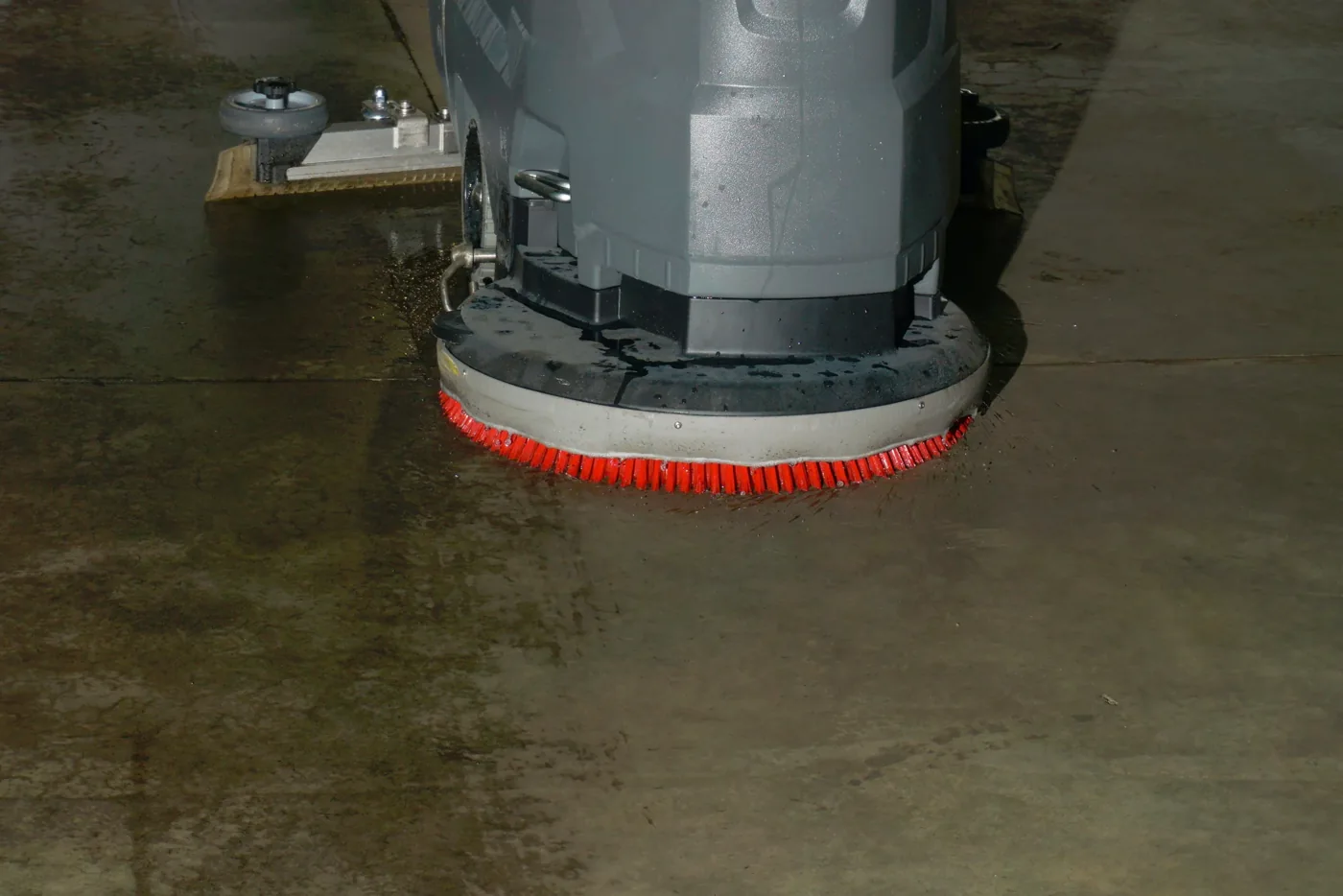
Where there is no continuing leak, assess the cleaning method and floor finish. Check whether the detergent was suitable for the contaminant, had sufficient contact time and was followed by effective recovery of contaminated liquid. The HSE’s floor-cleaning guidance explains these considerations. Worn coatings, damaged joints and porous concrete may require a different treatment from an intact resin surface. The guide to cleaning oil from concrete floors addresses the separate question of removing existing oil contamination.
For heavily affected areas, factory floor cleaning should be assessed against the contamination type, floor construction and access around equipment. Broader industrial floor cleaning methods must also account for whether dirty water can be collected without spreading contamination. A suitable treatment may improve surface condition, but it should not be mistaken for a machinery repair.
Confirming that the problem has been resolved
Compare the cleaned area’s condition before machinery restarts, during normal operation and after the next production period. This helps establish whether the same deposits are returning or whether there is a separate source elsewhere.
Useful records include the affected location, operating equipment, recurrence interval and any maintenance work completed. They also help distinguish isolated incidents from a persistent fault.
The most effective outcome is not simply a floor that looks clean at handover. It is a floor that remains suitable for its intended use because existing contamination has been addressed and any continuing source has been investigated.