Dust returns to warehouse racking because cleaning the rack surfaces does not necessarily remove the source of the dust. Fresh particles may be generated by daily operations, disturbed from overhead deposits or transferred from nearby stock. Sometimes material left in concealed rack sections becomes visible again after handling and vibration.
The time and location of the returning dust provide useful clues. A uniform new layer suggests a different cause from isolated deposits beneath particular beams or beside a busy loading area.
Airborne dust versus residual rack dust
Warehouse managers should first distinguish new dust settling from material that remained after the original clean.
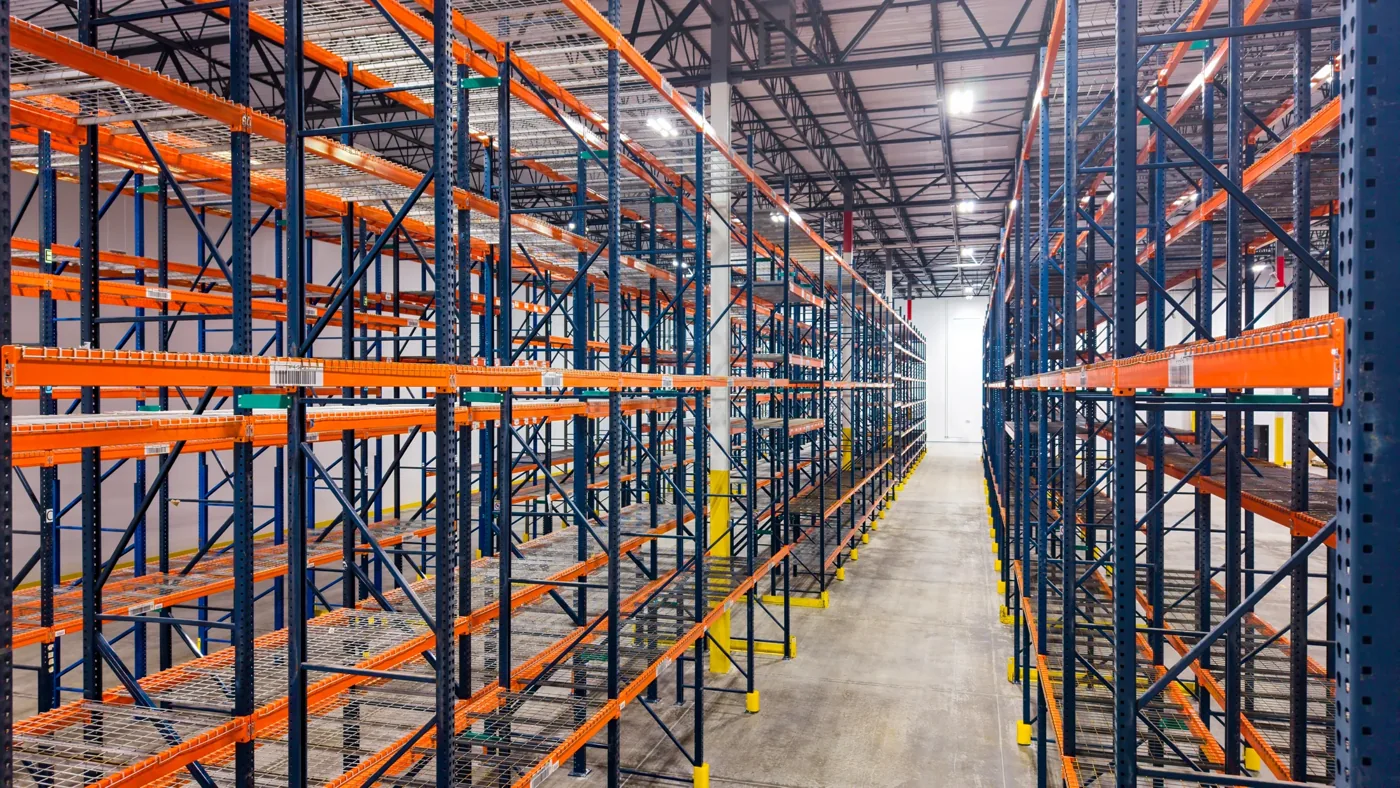
Fresh airborne dust commonly affects broad exposed horizontal surfaces. It may appear across several rack bays, particularly where goods movement or packaging activity is continuous.
Residual dust is more likely to remain around beam connections, recessed edges, pallet supports and awkward interfaces. These areas may look clean when viewed from an aisle but contain material that is subsequently displaced.
Consider the pattern across several locations:
- Dust appearing across numerous exposed upper beams may indicate airborne redeposition.
- Deposits concentrated beneath one service run or overhead structure may suggest material falling from above.
- Dust concentrated around frequently handled goods may reflect packaging, pallets or stock movement.
- Material repeatedly emerging from the same rack joint may indicate incomplete access during cleaning.
These patterns suggest where to investigate. They are not definitive proof of a source, particularly where several warehouse activities occur simultaneously.
How overhead deposits resettle
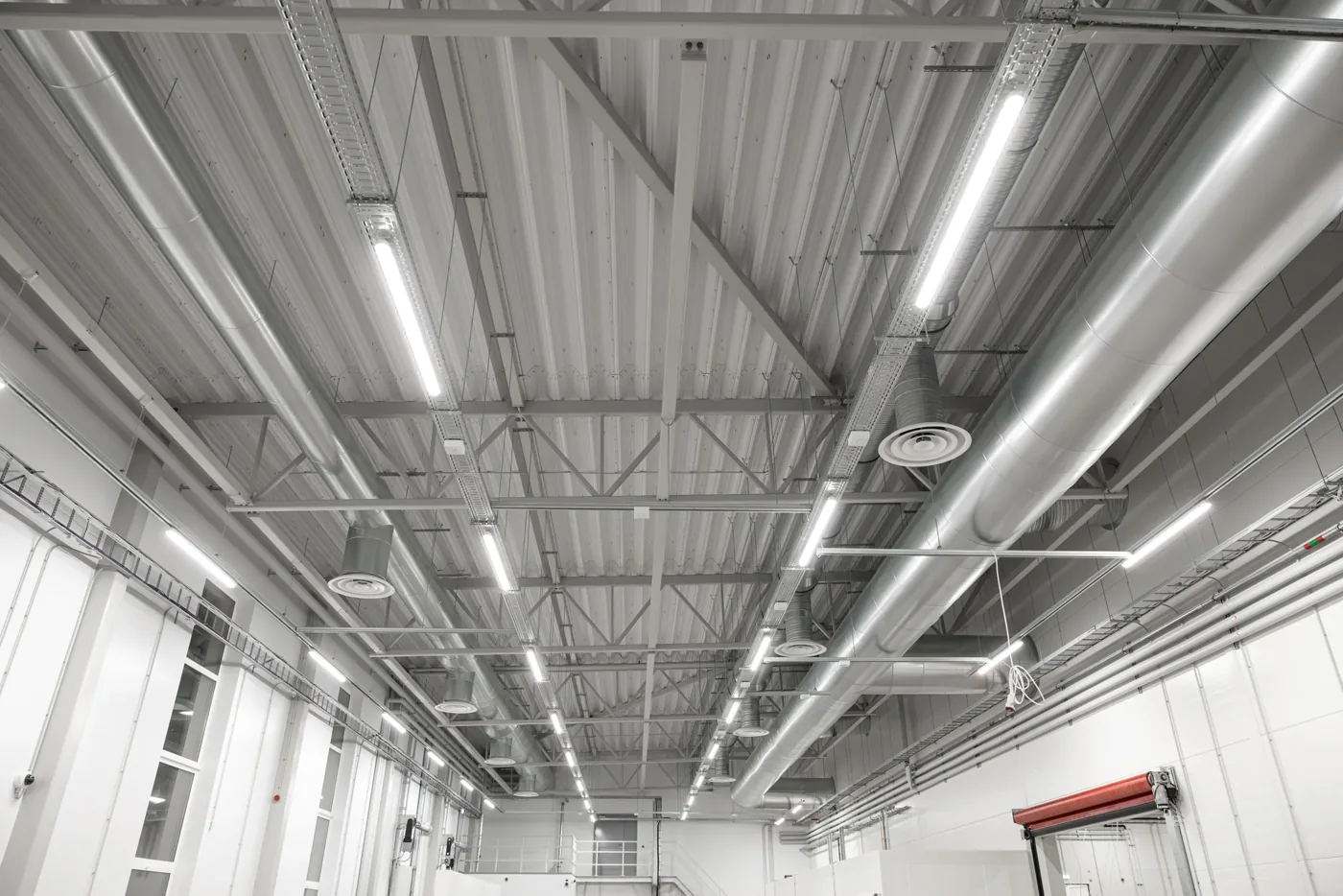
Warehouse buildings contain many surfaces above normal working height. Structural steelwork, service routes, suspended equipment and high ledges can retain dust long after the visible shelving has been cleaned.
Air movement from ventilation, open loading doors and everyday activity may redistribute loose material. Vibration or maintenance work can also dislodge deposits from overhead components.
Once airborne, particles may settle on the nearest available ledges and horizontal rack beams. This makes the racking appear dirty again even though the earlier cleaning removed its existing surface contamination.
The distinction is especially relevant in warehouses with elevated storage, large roof voids or substantial overhead services. Repeatedly cleaning the same accessible beams will not resolve a persistent source higher in the building.
Where the evidence points overhead, high-level industrial dust cleaning provides further explanation of where elevated deposits accumulate and why suitable collection methods matter.
Ongoing operations can replenish the dust
Not all returning dust originates above the racks. Goods handling may produce a continuing supply of particles through movement of cardboard packaging, damaged pallets, loose product and material carried into the warehouse.
Forklift and pallet movements can redistribute settled dirt, particularly around busy routes. Dust from nearby processing or packing operations may also enter the storage environment.
The practical question is whether the observed accumulation matches the activities taking place nearby. If the heaviest deposits occur close to unpacking areas or damaged packaging, extending the cleaning programme alone may have limited effect.
It is worth reviewing whether the source can be reduced through better containment, housekeeping or maintenance arrangements before deciding how frequently the racking needs attention.
A source-first cleaning sequence
Effective warehouse cleaning considers both where dust settles and how it travels.
The Health and Safety Executive’s COSHH control guidance describes the role of containment, extraction, working procedures and suitable clean-up arrangements in controlling exposure to hazardous substances.
Where warehouse dust presents such an exposure risk, cleaning arrangements should avoid unnecessarily spreading it into occupied areas. Equipment and collection methods need to match the material involved.
A practical sequence begins by identifying the likely generation points and accumulated overhead deposits. The relevant upper areas can then be addressed before lower rack surfaces, reducing the likelihood that subsequent work deposits material onto newly cleaned shelving.
The next stage is to examine beam faces, rack uprights, accessible recesses and horizontal surfaces. Areas containing stored goods need suitable arrangements for access and protection of stock.
After cleaning, record where dust first reappears and whether its distribution matches the suspected source. Comparison over similar operating periods is more informative than checking one location immediately after work.
Warehouse Racking Cleaning addresses the cleaning of the rack structure itself. Diagnosing recurrent contamination helps establish whether that work should be accompanied by overhead cleaning or changes to surrounding operations.
If dust is returning within a short period, the useful question is not simply how often to clean the beams. It is what continues to deposit material onto them and whether that source can be reduced.