Food production equipment can look completely clean and still fail allergen verification because allergenic proteins may remain in amounts too small to see. Residues can also survive around seals, joints and other areas that routine visual inspection cannot reach. A clean appearance is therefore an important first check, but it does not establish that an allergen has been adequately removed.
Visual cleanliness versus allergen removal
Visual inspection establishes whether obvious food deposits, films and particles remain on accessible surfaces. It is particularly useful for identifying cleaning failures that need attention before sampling takes place.
However, the absence of visible material does not mean that every trace of the previous product has disappeared. A surface may look spotless while retaining detectable milk, egg, wheat or other allergenic material.
The Food Standards Agency’s review of allergen cleaning research explains that neither visual inspection nor ATP testing should be relied upon alone to establish allergen removal. ATP testing detects adenosine triphosphate as a general hygiene indicator rather than measuring a specific allergenic protein. An ATP result therefore cannot independently establish whether the relevant allergen has been removed.
Cleaning performance also depends on the food being removed. Dry powders, sticky mixtures, oils and heated residues behave differently. A cleaning method that removes one product successfully might be less effective against another formulation or surface.
The important question for a food production manager is whether the established cleaning procedure has adequately removed the relevant allergenic residues from surfaces that could contaminate the next product. That includes areas which look clean but cannot be properly assessed by sight alone.
Hidden contacts and inaccessible components
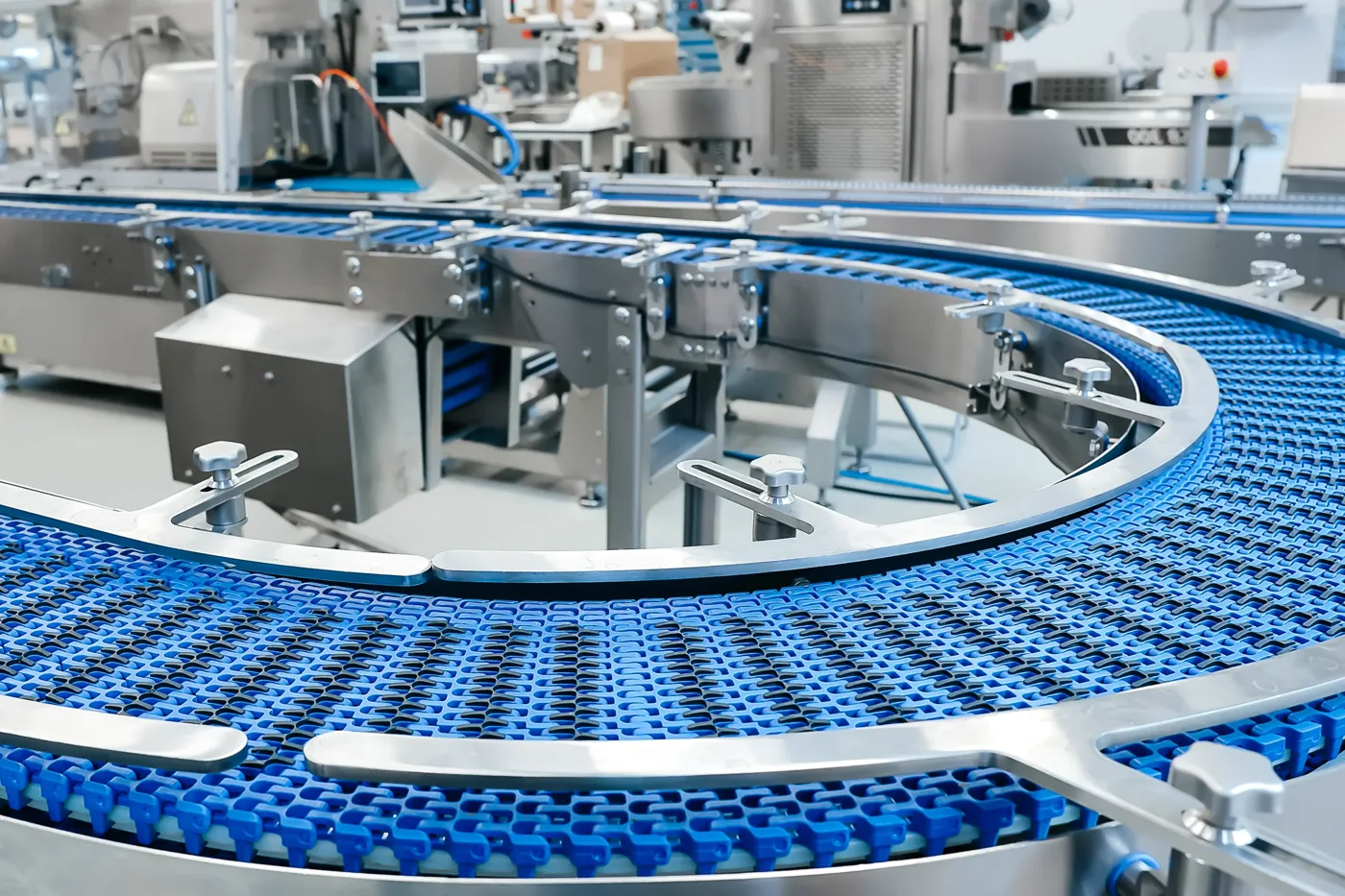
Most production lines contain interfaces that are harder to inspect than exposed stainless-steel panels. These include conveyor returns, belt joints, scraper assemblies, product guides, gaskets, removable guards and machinery connections.
Residue may accumulate where components overlap or where product is compressed against a surface. Powder can collect in recesses, while sticky ingredients may form thin deposits around seals or underneath removable fittings.
A recurring positive result near one component therefore deserves a different investigation from scattered failures across several areas.
For example, repeated findings at a conveyor transfer point could indicate that an underside, mounting or contact surface is not being reached. Positive results across unrelated surfaces might suggest a wider issue with cleaning coverage, equipment condition or movement of contaminated material.
Production managers should compare failed sample locations with equipment drawings, permitted dismantling arrangements and known product-contact routes. This makes it easier to identify surfaces that are routinely missed rather than repeatedly cleaning only the visible exterior.
Where these interfaces form part of a larger machinery system, the practical access considerations also relate to production line cleaning, particularly the need to coordinate equipment isolation, component access and reassembly.
How verification directs recleaning
Verification checks whether an established, validated cleaning procedure continues to work as intended. Validation addresses whether that procedure is capable of controlling the relevant allergen under defined conditions.
That distinction matters when a line fails. One failed swab does not automatically establish that the entire cleaning method is unsuitable. Equally, repeated failures should not be treated as isolated incidents without examining the procedure itself.
A useful investigation follows the evidence:
- Identify the allergen, sample location, test method and result that triggered the failure.
- Review which ingredients previously contacted that area and whether the cleaning procedure covered the relevant surfaces.
- Examine nearby joints, removable components and less accessible interfaces for possible retained deposits.
- Reclean the affected area using the site’s approved procedure, then repeat the required checks.
- Assess repeated findings to determine whether access, equipment condition or the validated procedure requires revision.
Test selection matters. Allergen-specific methods can provide information that general hygiene indicators cannot. However, sampling location, test suitability and detection limits all influence how a result should be interpreted.
A negative finding at one point does not establish that an unsampled component is clean. Likewise, a positive result needs to be interpreted against the site’s agreed verification criteria rather than judged solely by appearance.
If repeated failures reveal deposits in areas that routine cleaning cannot reach, the physical access and residue removal requirements may need reviewing. These are relevant considerations when specifying Food Factory Cleaning. The site’s food safety team remains responsible for setting the verification criteria, assessing the results and authorising production to restart.
The useful outcome of investigating a failed check is a specific explanation of what was missed, why residue persisted and what has changed to prevent the same failure recurring.