Yes. Clean kitchen extract filters do not establish that the ductwork behind them is free from grease. Filters collect part of the airborne grease generated by cooking, but deposits can still accumulate in the canopy, extraction plenum, duct bends, horizontal runs and fan components. Washing or replacing accessible filters deals with those components, not necessarily the remainder of the extraction route.
For a restaurant, hotel or commercial kitchen manager, the key decision is whether ordinary filter maintenance adequately addresses the current condition of the system or whether accumulated grease inside the extraction route needs separate attention.
Why can grease pass beyond apparently clean filters?
Commercial cooking produces a mixture of heat, water vapour, airborne particles and grease-containing fumes. The amount and nature of the contamination depend on the cooking activity and equipment used.
Grease filters are intended to remove grease from the extracted air before it travels further into the ventilation system. However, filtration is not the same as complete elimination of every grease-bearing particle or vapour.
Material that passes through or around the filtration stage can subsequently deposit on internal duct surfaces. Temperature changes, changes in airflow direction and the geometry of the duct route influence where deposits develop.
This explains why a filter can look clean shortly after washing while historical deposits remain further inside the extraction system. The filter’s present condition is not a reliable record of what has accumulated in concealed sections over previous operating periods.
The Health and Safety Executive’s guidance on catering kitchen ventilation explains that effective systems require suitable grease filtration and accessible ductwork for regular cleaning.
Where does grease accumulate beyond the canopy?
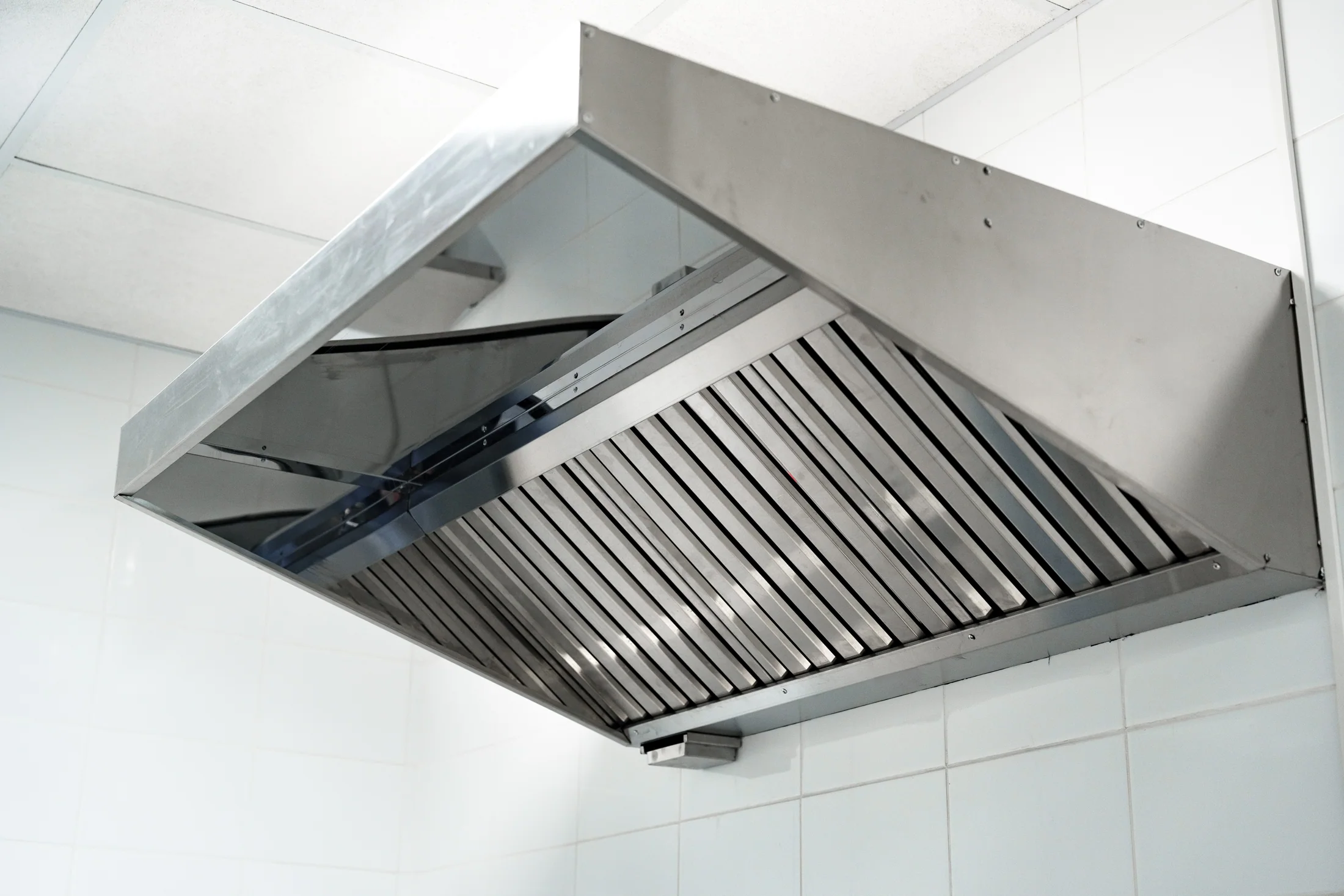
The visible face of a kitchen extraction system is only part of the route taken by contaminated air. A typical arrangement may include the canopy, filters, a collection space behind them, connected ducts, changes of direction, a fan and the final discharge point.
Areas worth considering include:
- Canopy interiors: Grease may remain on accessible internal surfaces even when the removable filters have been washed.
- Extraction plenums: The enclosed area behind or above the filters may retain deposits that are difficult to see from the kitchen.
- Duct bends: Changes in direction can influence the distribution and retention of grease deposits.
- Horizontal duct runs: Deposited material may remain on internal surfaces along extended routes.
- Fan assemblies: Grease can reach components further along the extract route, depending on the system arrangement.
- Concealed sections: Ductwork above ceilings or passing through building areas may not be visible from the canopy.
These areas should not all be assumed to contain the same amount of grease. Actual condition and accessibility determine the work needed.
When is filter cleaning enough, and when is internal cleaning needed?
Routine filter maintenance remains important. If the filters require washing but the internal extraction route has been separately assessed and is adequately maintained, cleaning the filters may be the appropriate immediate task.
The decision changes where evidence points to deposits beyond those removable components. Examples include visible grease behind the filter position, residue found during internal inspection, incomplete earlier cleaning records or an extraction route whose condition has not been established.
Filter cleaning and internal extract cleaning should therefore be treated as different maintenance activities:
- Filter maintenance addresses removable filtration components and their condition.
- Internal grease cleaning addresses contamination on the accessible internal surfaces of the extraction route.
- Ventilation performance assessment examines how the system functions, which is not established solely by deposit removal.
HSE’s guidance on gas safety in catering explains that ignition sources associated with some cooking activities can ignite accumulated grease in extraction ducts. It also emphasises regular duct cleaning to control grease and fat deposits.
The distinction matters because repeatedly washing filters will not remove grease already attached to a concealed duct wall.
What determines how frequently internal cleaning is needed?
The appropriate cleaning interval cannot be established from the date the filters were last washed. It depends on the cooking activity, hours of use, extraction arrangement, effectiveness of filtration and evidence of accumulating deposits.
A kitchen producing substantial quantities of airborne grease may have a different maintenance requirement from one whose principal activities involve boiling or steaming. The operating pattern can also change, making an older cleaning schedule a poor reflection of current conditions.
A useful review considers:
- What cooking processes are currently carried out and for how long.
- Whether the extraction system has changed since the previous assessment.
- What areas the last internal clean actually covered.
- Whether inspection has identified grease within accessible duct sections.
- Whether areas omitted from previous work remain unassessed.
There is no single universal interval that can responsibly be assigned to every kitchen from these facts alone. Cleaning frequency should respond to the actual extraction system and accumulation rather than an unsupported assumption that every installation needs identical treatment.
Why do duct access points matter so much?
A contractor cannot establish complete internal cleaning coverage merely by reaching the filter opening. Ducts can turn, branch, change dimensions or extend through inaccessible parts of a building.
Access panels enable defined sections to be inspected and cleaned, but one opening may not provide adequate reach through every bend or long run. The location and condition of existing access points therefore affect both the achievable work and the evidence available afterwards.
HSE’s catering ventilation information sheet explains that extraction ductwork should be designed with suitable access for regular cleaning. This means accessibility is part of effective system maintenance, not simply a convenience for the person undertaking it.
If a section cannot be reached, it should be identified as an access limitation rather than described as cleaned because adjacent surfaces were treated.
The broader ductwork cleaning services page addresses other types of internal ventilation and extract routes. Cooking-grease contamination requires attention to the specific nature of the kitchen extract system.
What should a kitchen manager request after cleaning?
Evidence of work should distinguish which parts of the extraction route were cleaned from components that were inspected only, omitted or remained inaccessible. Photographs can help when they are associated with identifiable locations rather than presented without context.
A useful completion record identifies:
- Which canopy, plenum, duct and fan sections were included.
- Which access openings were used to reach those areas.
- Where internal deposits were found and subsequently removed.
- Any sections whose condition could not be established.
- Defects or access problems requiring separate attention.
- The basis for the proposed future maintenance review.
The distinction between cleaning coverage and ventilation performance should remain explicit. Removing deposits does not independently establish the correct airflow rate, adequate replacement air or satisfactory combustion conditions. Those matters involve the wider ventilation arrangement described in HSE’s catering guidance.
How should the next cleaning job be specified?
Start with the extraction route rather than the visible filters. Identify the cooking equipment served, the canopy arrangement, available maintenance records, known duct access and any concealed sections requiring consideration.
A quotation that covers only filters and the visible canopy may be appropriate for a limited maintenance task, but it should not be mistaken for cleaning the full internal extract route.
When arranging kitchen extract cleaning for canopies and accessible grease ducts, ask for the proposed coverage to be defined by component and location. This allows the buyer to distinguish routine filtration maintenance from removal of accumulated grease deeper within the system and to identify any access issues before work begins.