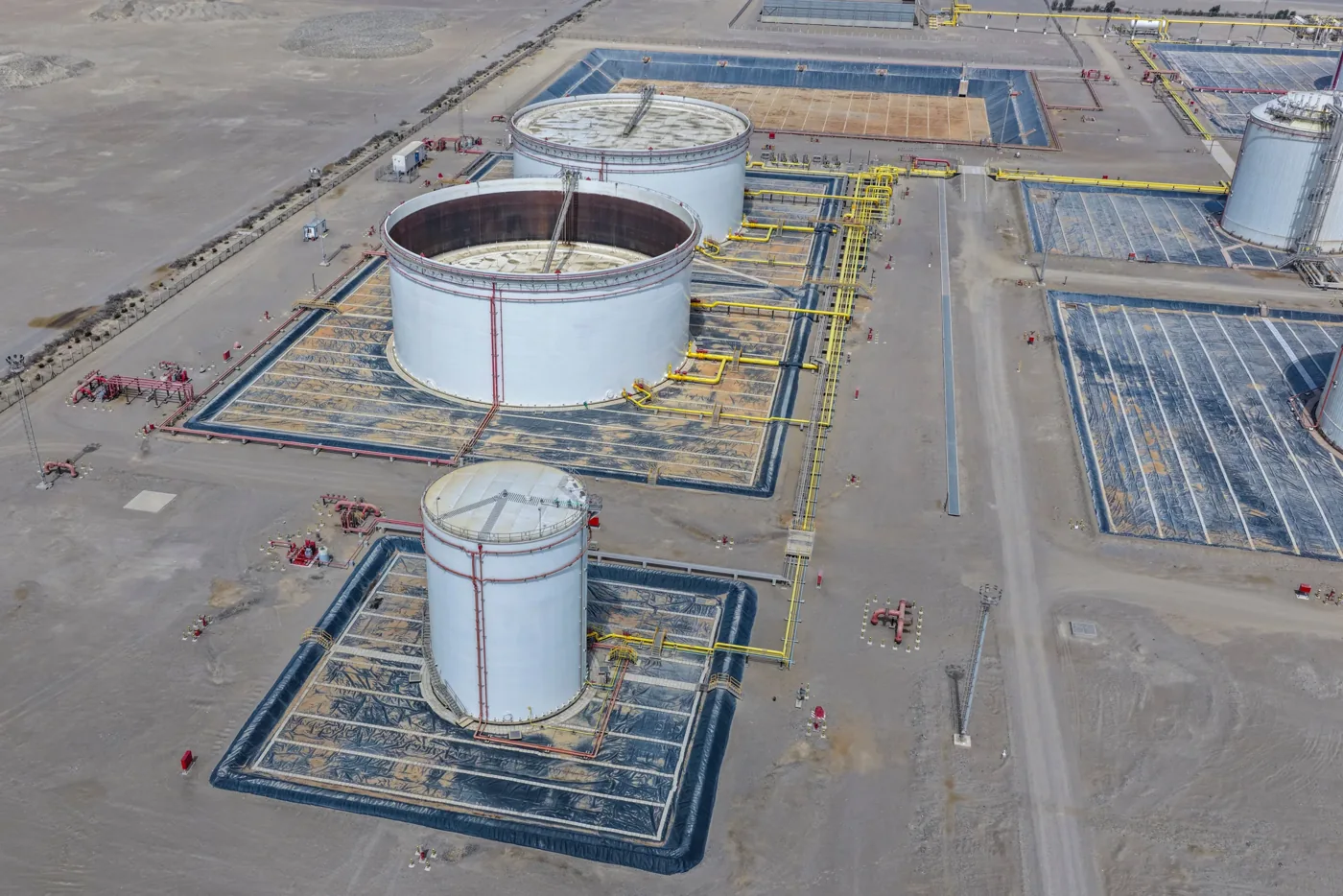
Yes. Some industrial tanks can be cleaned entirely from outside using suitable external-access equipment. Whether this is practical depends on the tank’s openings, internal layout, deposits and required standard of cleanliness. Other tanks cannot be adequately cleaned or inspected without entry, particularly when internal structures obstruct access or deposits remain beyond the reach of external equipment.
The decision should follow an assessment of the actual tank rather than an assumption that every tank requires somebody inside it.
What can be reached from outside?
Cleaning a tank from outside may involve equipment introduced through an existing opening, including remote washing arrangements or suction equipment for suitable liquids and loose deposits. This allows internal surfaces or contents to be addressed without positioning an operative inside the vessel, provided the equipment can reach the required areas.
The main advantage is that cleaning can potentially be completed without a person entering the vessel. That removes the need for personnel to work inside the tank, although hazards associated with its contents, equipment and connected systems still need managing.
Several features influence whether external cleaning is feasible:
- Opening position and size: a top opening may provide different coverage from a low-level access hatch.
- Tank shape: cylindrical vessels, rectangular chambers and compartmented tanks present different access limitations.
- Internal fittings: pipework, agitators, supports and baffles can obstruct cleaning equipment.
- Deposit characteristics: loose liquid and sludge behave differently from hardened scale or strongly adhered material.
- Completion requirements: removing the bulk contents is not necessarily equivalent to exposing every surface for inspection.
For suitable loose material, industrial vacuuming services may form part of an external removal approach. Whether the method can reach the full deposit area must be established before relying on it.
Sludge depth, openings and internal obstructions
Sludge depth can significantly change the work required. A thin, accessible layer may be removable without entry, while deeper settled material can conceal obstructions and prevent equipment from reaching the tank floor.
This makes it important to distinguish between removing the bulk contents and achieving the level of cleaning needed for the tank’s next use.
Bulk removal may expose the bottom of a vessel but leave residue on walls, behind baffles or beneath fixed equipment. Where the purpose is maintenance, coating inspection or checking for corrosion, those remaining deposits may prevent the intended examination.
Before selecting an external method, the plant manager should establish what condition the tank must be in when work finishes. A tank being emptied for routine maintenance may have different completion requirements from one undergoing a detailed internal inspection.
Existing drawings, information about previous contents and maintenance records can help identify likely restrictions. Nevertheless, drawings cannot establish the current extent or consistency of deposits. Actual conditions may have changed since the last inspection.
Restricted access also affects how results can be checked. If a remote system cannot reach or adequately reveal a section of the vessel, the cleaning outcome for that area remains uncertain.
When entry controls and rescue arrangements are necessary
In Great Britain, the Confined Spaces Regulations 1997 require relevant confined-space entry to be avoided where the work can reasonably be completed from outside. The Health and Safety Executive’s explanation of the legislation also sets out requirements for a safe system of work and suitable emergency arrangements when entry cannot be avoided.
Not every tank automatically falls within the legal definition of a confined space. The classification depends on its conditions and the specified risks of serious injury, including those associated with dangerous atmospheres and other recognised confined-space hazards.
Where assessment establishes that entry is necessary, the arrangements may need to address isolation of connected equipment, atmospheric hazards, communication, supervision and the means of recovering an entrant during an emergency.
Rescue arrangements need to exist before work begins. Reliance on somebody improvising assistance after an incident is not an adequate substitute.
This is an important distinction when comparing external tank cleaning with Confined Space Cleaning. Avoiding entry is preferable where the required result can genuinely be achieved without it. Where entry remains necessary, the work must be planned around the hazards actually present.
Choosing the appropriate scope
A useful tank cleaning specification identifies the contents, access points, major internal obstructions and intended condition after cleaning. It should also establish whether confirmation is required through accessible visual examination, other inspection methods or direct access.
If external equipment can remove the necessary deposits and the result can be established, entry may be unnecessary. If inaccessible contamination prevents completion, a different approach is required.
The appropriate method is the one that delivers the specified cleaning outcome while avoiding unnecessary entry, rather than simply the one that removes the largest quantity of material.