Yes. A warehouse can often be cleaned without removing all its stock, provided the cleaning scope separates areas that can be accessed and protected from areas where goods genuinely obstruct the work. Some aisles, floor areas and accessible structures may be cleaned with stock remaining in position. Other locations may require selected pallets to be moved, individual bays to be released or local operations to stop temporarily.
Emptying an entire warehouse should not be the automatic starting assumption. Equally, cleaning around every pallet without considering what lies behind or above it can produce an incomplete result. The practical decision is which stock must move, what can stay and how the warehouse will record areas that remain inaccessible.
Which warehouse areas can be cleaned with stock remaining?
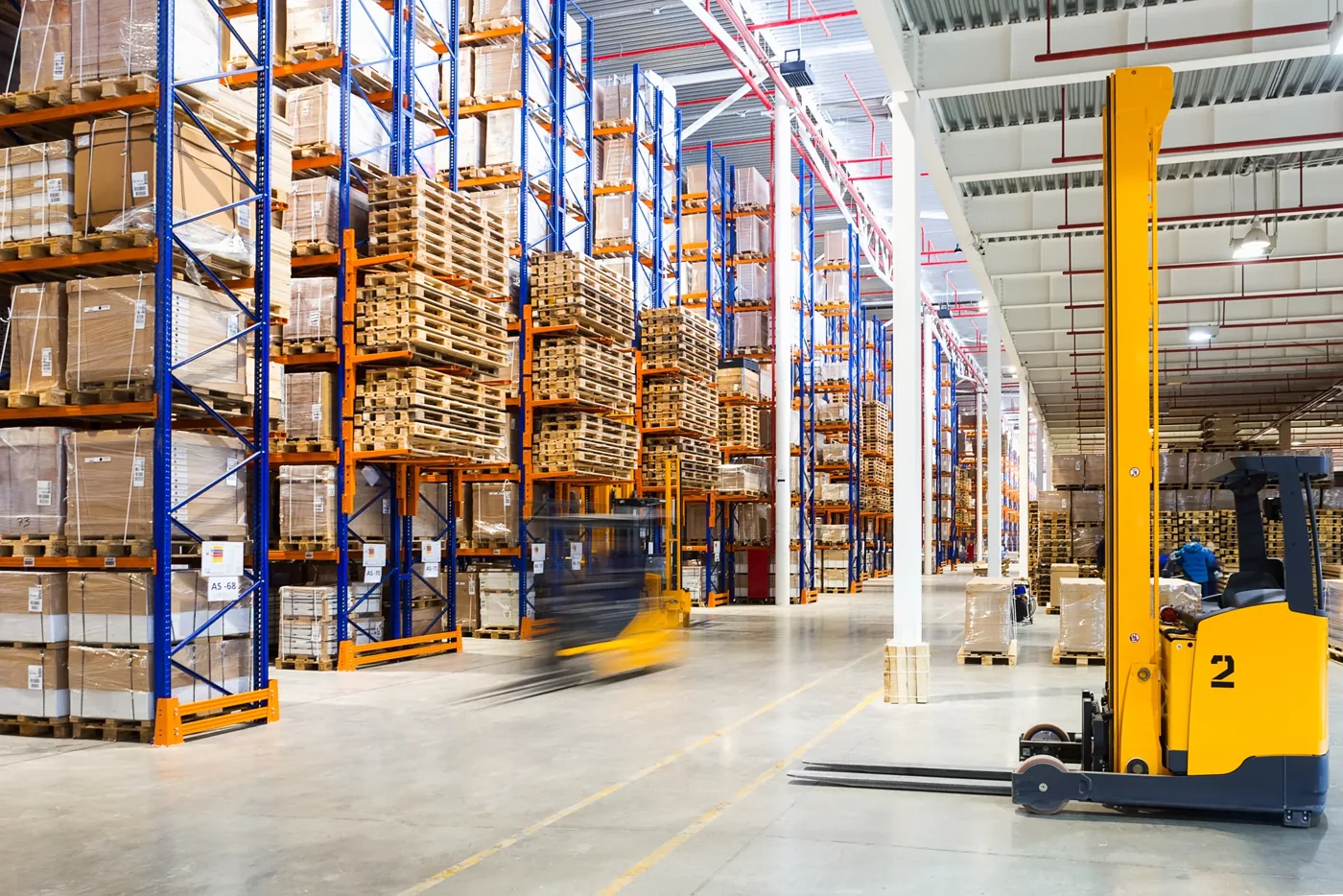
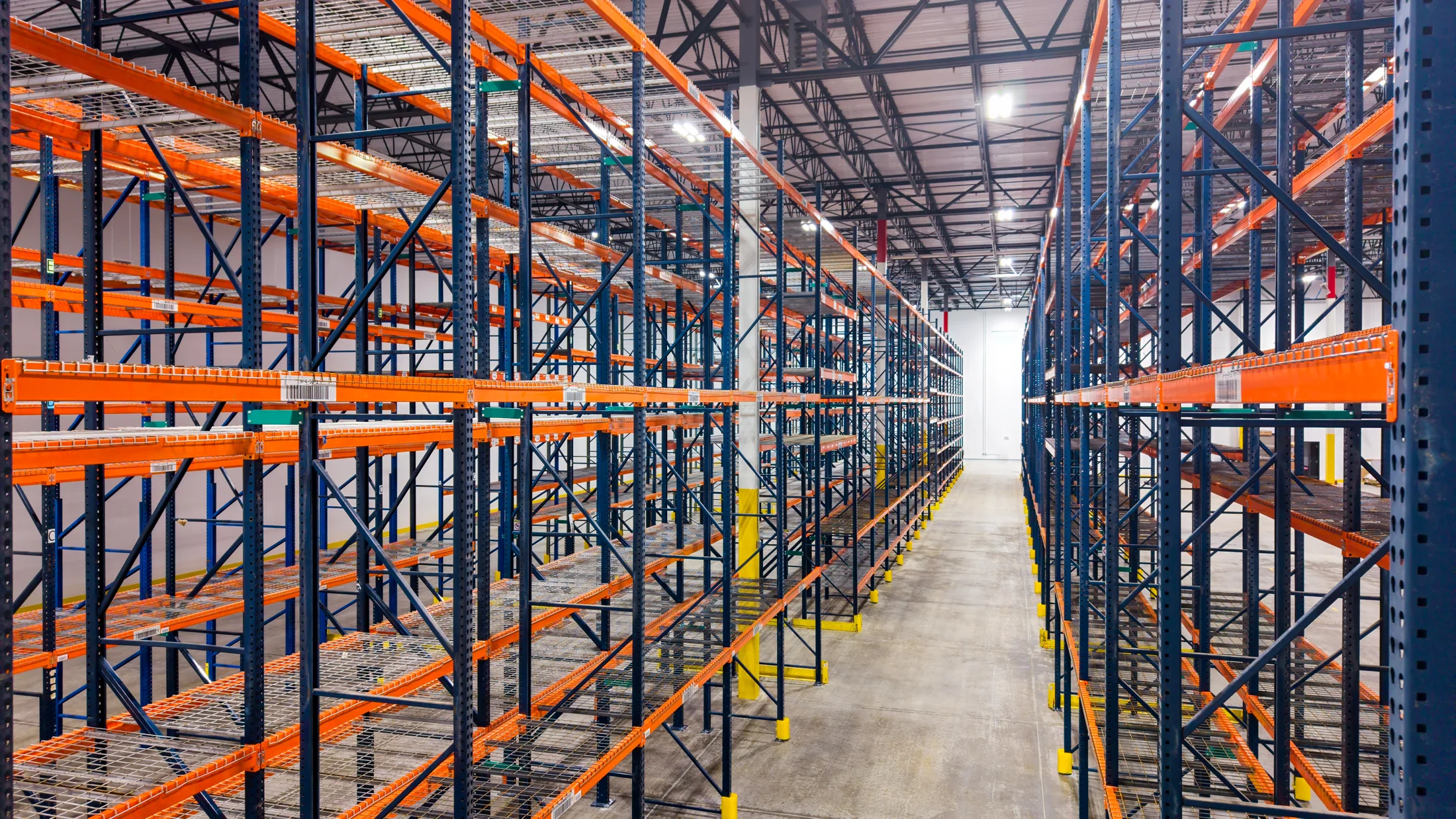
The answer depends on the relationship between the stored goods and the surfaces requiring cleaning. An open aisle may provide adequate access to exposed floor surfaces and accessible structural features. Stock within racking, however, can obstruct the rear of beams, pallet supports, wall junctions and areas beneath lower storage positions.
Different stock arrangements create different limitations:
- Wrapped palletised goods: Intact wrapping may offer some protection from incidental settled dust, but it is not proof that the goods can tolerate falling debris, splashing or contact with cleaning products.
- Open cartons: Exposed packaging and contents can be vulnerable to dust or deposits released from adjacent structures.
- Open-topped containers: Their contents may require covering or relocation before nearby overhead cleaning.
- Goods stored directly on the floor: The area underneath cannot be cleaned properly unless those goods are moved.
- High-density storage: Closely packed locations can prevent access to rack components or the building fabric behind the stock.
A useful survey distinguishes surfaces that are visible from surfaces that can actually be reached and cleaned. Looking down an aisle does not establish access behind a loaded pallet.
When is selective stock relocation necessary?
Selective relocation becomes necessary when the required cleaning result cannot be achieved with the goods in position, or when retaining them would expose stock to contamination during the work.
For example, cleaning an upper beam can disturb deposits above the stored goods. Covering the goods may be appropriate for some conditions, but in other cases relocation is needed to expose the beam, permit effective collection or protect the product beneath it.
The cleaning scope should identify the minimum affected storage locations rather than automatically prescribing a complete warehouse clearance.
The buyer can divide locations into three categories:
- Clean in position: Accessible surfaces can be treated without moving the stored goods.
- Protect and clean: Stock remains in place with an appropriate protection arrangement that does not obstruct the cleaning method.
- Relocate and clean: Stock is moved because surfaces are otherwise inaccessible or protection cannot adequately address the contamination route.
This classification turns an undefined stock-removal problem into a manageable list of actual locations. It also allows the warehouse team to schedule replenishment and picking around the work rather than relocating goods unnecessarily.
How should the cleaning sequence account for stored goods?
A sensible sequence considers where dust and debris originate and where they may settle during cleaning. If overhead structures need attention, completing exposed lower surfaces first can mean those surfaces are contaminated again by subsequent activity above them.
Where appropriate, accessible high-level deposits can be addressed before lower structures and floors. However, the chosen collection method is important. Simply dislodging dust from roof beams or services does not establish that the material has been removed from the warehouse.
The existing guide to high-level industrial dust cleaning explains how deposit composition, collection and surrounding activities influence that separate technical decision.
Cleaning around goods should also distinguish dry deposits from contamination requiring liquid treatment. A method suitable for a robust concrete floor is not necessarily appropriate alongside absorbent packaging, vulnerable labels or exposed stock.
HSE’s floor-cleaning guidance explains why cleaning methods and access restrictions must account for wet surfaces and cleaning residues. This affects when cleaned warehouse floor sections can be used again.
What if the warehouse continues operating?
Remaining operational does not mean every aisle must remain available throughout cleaning. The warehouse can identify specific areas that are temporarily released from picking, replenishment or vehicle movements while work proceeds elsewhere.
The important issue is whether an affected storage location can remain closed long enough for the agreed work to finish. A pallet moved back prematurely may conceal an unfinished area or prevent an effective completion check.
The HSE’s warehousing guidance explains the importance of separating pedestrians and workplace vehicles, with physical barriers where reasonably practicable. For cleaning work, this supports planning distinct access arrangements rather than allowing cleaning personnel and operational traffic to share an active work area.
For floor-specific traffic decisions, the separate warehouse floor cleaning service addresses that narrower work category.
Access equipment presents another constraint. Elevated work may require an appropriate platform and sufficient clear floor space. Racking should not be treated as an improvised access structure. HSE’s work-at-height guidance for cleaning establishes the importance of selecting suitable access arrangements.
How can a buyer establish which areas were completed?
The most useful completion record connects the cleaning specification to identifiable warehouse locations. A general statement that the warehouse has been cleaned is less informative than a record showing which bays, aisles and elevations were accessible.
Agree an approach to documenting:
- The aisle numbers, bay references and structural areas included in the agreed scope.
- Which locations were cleaned with stock remaining in position.
- Where goods were protected or relocated.
- Which surfaces remained inaccessible and why.
- Any areas requiring another access window or separate maintenance work.
- The condition against which cleaning completion is assessed.
For example, a bay may have clean accessible front faces while the rear remains concealed by goods. Recording that distinction prevents the entire bay from being treated as fully completed without supporting evidence.
Visible racking damage discovered during cleaning is a separate issue from cleanliness. The HSE’s warehousing and storage guidance distinguishes routine reporting and inspection of storage systems. A cleaning completion record should not be mistaken for an engineering assessment of rack condition.
What should the warehouse manager agree before booking?
Before requesting a price, identify the warehouse areas requiring work, typical stock occupancy and the periods when locations can be released. The cleaning objective should be specific enough to determine whether stock needs moving.
If the aim is to remove accessible surface dust, much of the stock may remain in position. If the aim is to expose all concealed structural surfaces, considerably more relocation may be necessary. Neither outcome should be assumed without establishing the required coverage.
When discussing warehouse cleaning services for occupied storage facilities, provide a site layout or bay references, describe the goods being stored and identify operational constraints. This makes it possible to distinguish practical in-position cleaning from areas needing stock movement and to establish an achievable, verifiable scope.