Industrial Cleaning Leeds

Industrial cleaning in Leeds for factories, process plant and new industrial units: production lines, tanks, silos and pits cleaned so the site can run, be inspected or be handed over.

HomeIndustrial Cleaning Leeds

Industrial Cleaning Leeds quote

Industrial cleaning in Leeds and the Aire Valley

Industrial cleaning in Leeds covers factories, production lines, process plant, tanks, silos, pits and industrial units. Older works buildings can present difficult access and sensitive surfaces, while larger premises in the Aire Valley often require extensive floor, plant and high-level cleaning. The work depends on what needs removing, where it has accumulated and how the area can be accessed without disrupting neighbouring operations.

Cleaning methods include high-pressure jetting, vacuum recovery, steam cleaning and hand degreasing, selected according to the residue, surface and site conditions. The wider range is covered by our industrial cleaning services.

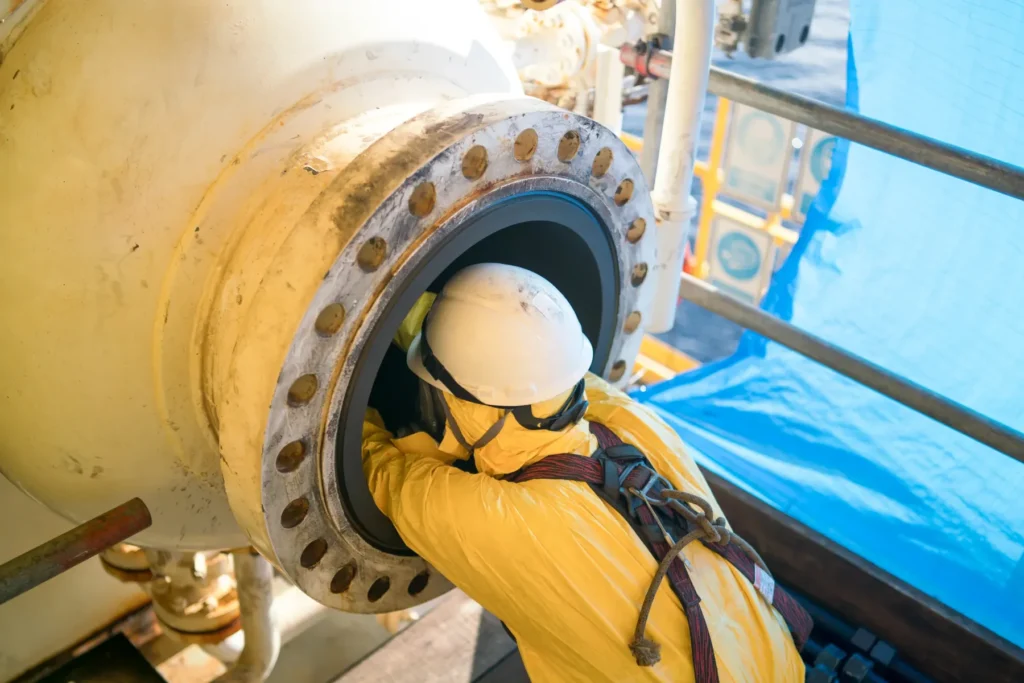
Worker in a yellow protective suit, hard hat and harness leaning into the open manway of a pressure vessel

Factories and process plant

Lines, hoppers, vessels and overhead steel cleaned during planned downtime.

Tanks without entry first

Jetting heads and vacuum recovery used from outside before anyone goes in.

New unit handovers

Construction dust cleared from slabs, steelwork and liners before fit-out.

Factory cleaning in Leeds

Factory cleaning in Leeds usually means more than floors: product builds up under conveyors, inside hoppers and around filling heads, and oil and dust gather on machine frames and overhead steelwork. Production line and process plant cleaning can be arranged around planned downtime, with isolation requirements and site permit procedures considered before work begins. Areas can then be inspected by the site team before machinery is returned to service. Food and drink producers may also need cleaning to follow their hygiene and allergen control procedures, covered further under factory cleaning services.

  • Production lines and conveyors with built-up product or deposits
  • Hoppers, chutes and mixing vessels requiring emptying or washing
  • Machine frames and overhead steelwork affected by grease and dust
  • Floor channels and gullies containing silt, sludge or residue

Some cleaning work involves deposits beneath fixed machinery or around pipework where conventional floor cleaning cannot reach. Access panels, guarding, electrical equipment and adjacent production areas all affect the method selected. The amount of residue and how it can be collected also matter, particularly where washing would spread material into another part of the building.

Tanks, silos and confined spaces

Process tanks, silos, effluent pits and interceptor chambers may contain sludge, product residue or deposits that restrict inspection and maintenance. Cleaning from outside the vessel is considered first, using suitable jetting or vacuum equipment where the access points, vessel design and material allow it. Rotating jetting heads, vacuum hoses and long lances are among the methods that may be suitable.

Where entry cannot be avoided, the work must be assessed and planned under the Confined Spaces Regulations 1997. Relevant controls can include atmosphere testing, isolation of connected pipework, appropriate supervision and emergency arrangements that do not rely solely on the emergency services. The HSE guidance on working in confined spaces explains the requirements. See also confined space cleaning for the service itself.

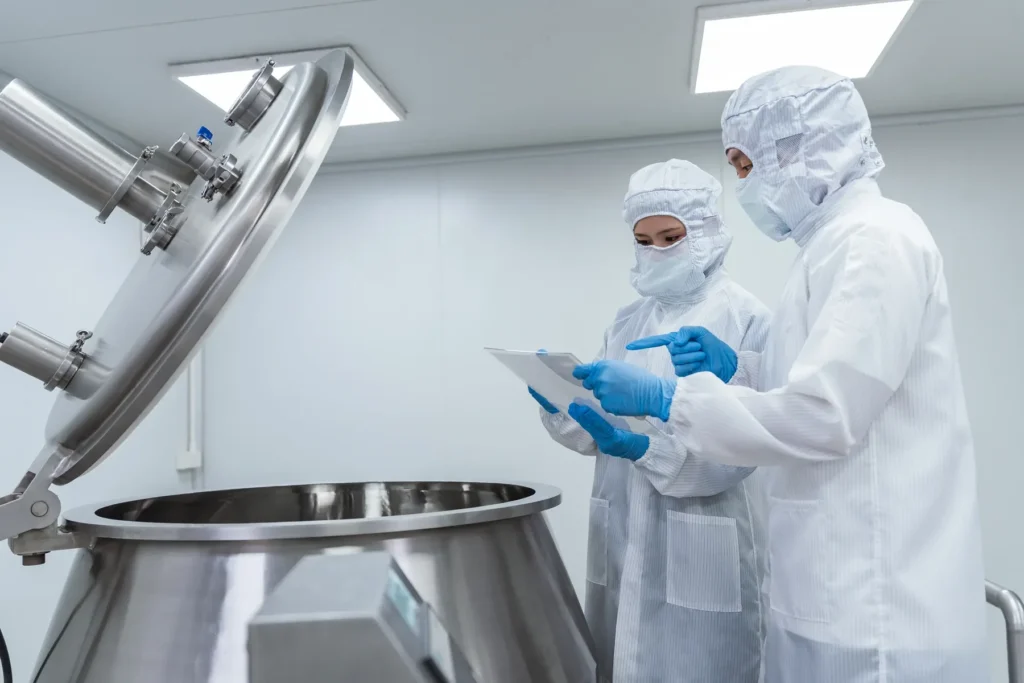
Two technicians in protective suits and masks checking a clipboard beside an open stainless steel process vessel

Industrial cleaning in Leeds

Tell us about the line, tank or building in Leeds you need cleaned and when it can be taken out of use.

Older works and new Aire Valley units

Older mill and works buildings bring particular cleaning constraints. Upper floors may require controlled water use, while timber, brick and aged finishes need careful consideration before pressure washing or chemical cleaning. Goods lifts, narrow staircases and restricted loading areas can also limit equipment access. Dry collection or vacuum recovery may be more appropriate where water penetration or runoff would cause problems.

Newer industrial premises in the Aire Valley, including developments around junction 45 of the M1, have different requirements. Large floor areas, high roof steel, cladding liners and long runs of racking or process equipment can require a combination of floor, high-level and detailed plant cleaning. Access equipment and the position of installed services influence how the work is approached. The Leeds City Region Enterprise Zone includes purpose-built industrial and distribution premises in this area.

Handover cleaning for new industrial units

A completed unit or factory extension can contain concrete dust, sealant residue and packaging debris across floors, steelwork and building services. Handover cleaning concentrates on removing construction contamination before racking, machinery or other operational equipment is installed. Particular attention may be needed around floor joints, structural steel, ledges and cladding liners where dust collects during construction.

The cleaning method depends on the condition of the slab, whether finishes have been applied and which areas remain accessible. Dust extraction, vacuum collection and suitable surface cleaning can be considered before fit-out or occupation. There is more on this under industrial cleaning for construction.

Wash water, waste and Yorkshire Water

Industrial cleaning can produce water containing oil, product residue, silt or cleaning chemicals. The method of collection and disposal depends on what the water contains and where it would discharge. Contaminated wash water may be classed as trade effluent. Discharge of trade effluent into a public sewer requires the sewerage undertaker’s consent under section 118 of the Water Industry Act 1991.

Yorkshire Water is responsible for public sewerage in Leeds, while private drainage arrangements require separate consideration. Leeds City Council’s drainage guidance explains responsibilities for gullies, sewers and private drains. Surface water drainage can lead directly to the environment, so contaminated cleaning water must be kept out of those systems. Collection for reuse, treatment or removal by a registered waste carrier may be appropriate, depending on the waste. GOV.UK pollution prevention guidance covers contaminated water and drainage.

Chemical selection also depends on the material being removed, the surfaces involved and the relevant COSHH assessment. Planning wastewater recovery alongside the cleaning method helps prevent residue being moved from one part of the site to another.

For sites across the Pennines, see industrial cleaning in Manchester, or browse the industrial cleaning areas we cover.

Industrial Cleaning Leeds: common questions

Do you carry out factory cleaning in Leeds during shutdowns?

Yes. Production line and plant cleaning can be arranged around planned downtime, including weekend stops and scheduled shutdowns. The areas to be cleaned, isolation requirements and site permit procedures need to be established before work begins.

Can you clean a tank or silo without anyone going inside?

Often, depending on the vessel and the residue. Rotating jetting heads, vacuum hoses and long lances can provide access through suitable openings. Where entry is necessary, the work requires a confined-space risk assessment, appropriate controls and emergency arrangements.

Can wash water from our Leeds site go into the sewer?

It depends on what the water contains and the drainage connection. Trade effluent entering a public sewer requires consent from Yorkshire Water. Contaminated water must not enter surface water drains. Collection, treatment or removal by a registered waste carrier may be needed.

Do you clean new industrial units in the Aire Valley before they are occupied?

Yes. Industrial handover cleaning covers construction dust and residue on floors, steelwork and wall liners. The work depends on the building's condition, installed equipment and which areas need cleaning before fit-out or occupation.

Can you work in older mill buildings with timber floors?

Yes, subject to the building's condition and access arrangements. Dry collection, vacuum recovery and controlled water use may be suitable where timber floors or sensitive finishes make conventional pressure washing unsuitable.

Industrial Cleaning Service

Services

Request a quote

Menu

Get a quote